
5 Star Garage Door · Connecticut
Dock Leveler Repair & Replacement in Connecticut
A dock leveler bridges the height difference between the loading dock and a truck bed. When its deck, lip or operating system stops working correctly, the loading bay may no longer be safe to use. Contact 5 Star Garage Door to discuss dock leveler inspection, repair and replacement needs in Hartford, New Haven, Litchfield and Fairfield counties. The service scope depends on the equipment model, its condition and the site requirements. Identifying the leveler before work is scheduled helps establish the appropriate assessment and parts path.
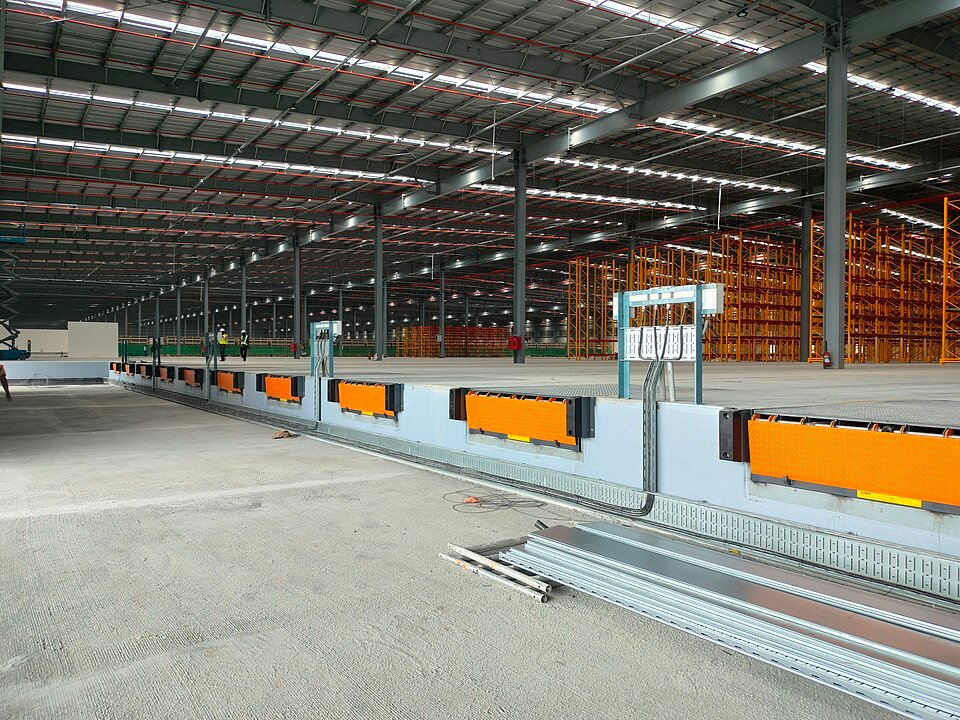
Identify your dock leveler before planning service
Mechanical, hydraulic and air-powered levelers use different lifting systems and components. Mechanical units commonly rely on springs and a hold-down mechanism. Hydraulic units use a hydraulic power system, while air-powered designs use an air-lifting arrangement. Controls and operating sequences vary by manufacturer; equipment that looks similar may require different parts and service procedures.
Send a readable photograph of the manufacturer label, model and serial number if accessible without entering a hazardous area. Note whether the equipment is pit-mounted or edge-of-dock. Its dimensions, rated capacity and available manuals are useful identification details, but suitability for your traffic and loads requires an equipment-specific review—not a capacity guess based on appearance.
Common problems that need assessment
Service inquiries often involve a deck that will not raise or lower normally, a lip that will not extend or retract, uneven movement, unusual noises or an operating control that does not respond. Visible fluid leakage, damaged hinges and a leveler that does not return to its expected stored position also warrant assessment. Describe what happens during normal operation without repeatedly cycling malfunctioning equipment.
Symptoms can have several causes. A control problem is not necessarily a failed control station, and poor deck movement is not necessarily a single spring or cylinder failure. The assessment needs to consider the complete operating system, deck and lip condition, hinges, supports and surrounding installation before the repair scope is selected.
Repair versus replacement
Repair may be appropriate when compatible parts are available and the remaining assembly is in suitable condition. Replacement may deserve consideration when damage is extensive, essential parts are unavailable or the existing configuration no longer suits the facility's operation. A proposed repair should address the cause of the problem, not simply restore movement temporarily.
A replacement assessment includes the existing opening or pit, installation condition, equipment dimensions, truck service conditions, operating controls and available utilities. Load requirements and the manufacturer's specifications must be established before selecting equipment. Any needed structural or electrical work should be identified separately in the scope rather than assumed to be included.
Keep an unsafe loading bay out of service
If the deck or lip is damaged, moves unexpectedly or cannot provide its intended support, keep the affected bay out of use and follow the facility's isolation procedure. Keep personnel clear of the area beneath the leveler. Do not enter the pit, defeat safeguards or attempt spring, hydraulic or support adjustments to keep deliveries moving.
The leveler, dock door, bumpers, vehicle restraint and other bay equipment perform different jobs. A working overhead door does not establish that the leveler is safe, and a repaired leveler does not verify the condition of every other component. Identify any related bay problems when requesting service so they can be considered without treating separate systems as interchangeable.
Request dock leveler service in Connecticut
Provide the property town, bay identifier, equipment label, accessible photographs and a short description of the fault. Let us know whether the bay is already isolated, whether other loading positions remain available and any site access requirements. For multiple bays, list each affected leveler separately so different models and symptoms are not combined into one assumption.
We will discuss the equipment and proposed assessment before the work is finalized. Repair options, replacement needs, pricing and scheduling depend on the model, findings, parts availability and site conditions. Include any related commercial door or operator issue in your inquiry so the overall bay requirements can be reviewed.
Related services
Frequently asked questions
Do all dock levelers use the same replacement parts?
No. Parts and procedures depend on the manufacturer, model and operating system. A readable identification label and equipment documentation help establish compatibility before parts are selected.
Can the loading bay stay in use while a leveler is malfunctioning?
Do not use a bay with a leveler that is unsafe or cannot operate as intended. Isolate the affected area under your facility's procedures until it has been assessed and cleared for use.
Can you assess a leveler and its dock door together?
Include both in the service inquiry. They are separate systems, and the scope needs to identify each equipment type, fault and required work. Service options depend on the models and site conditions.